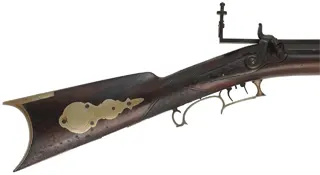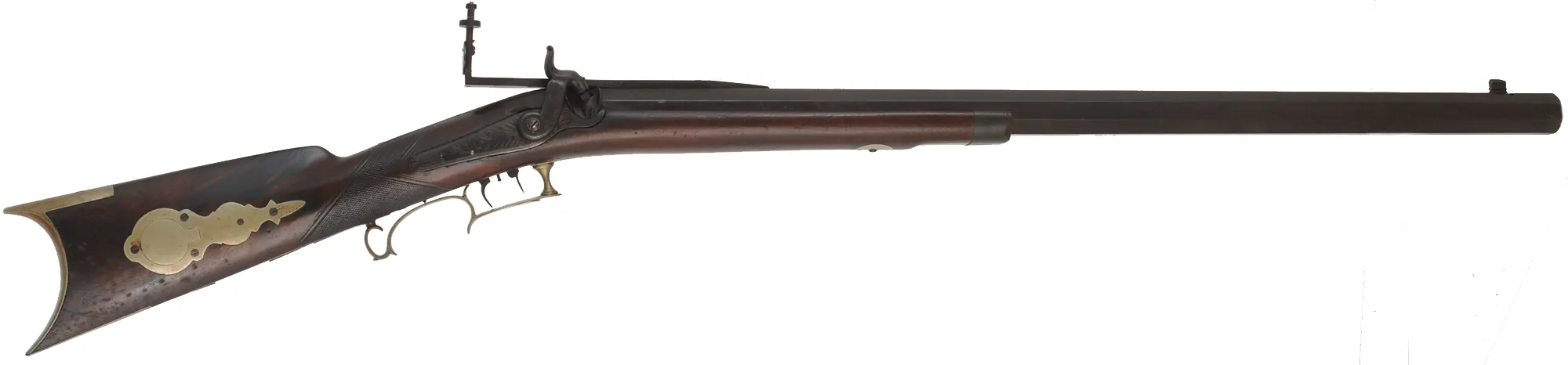



This antique target rifle is marked A. Leonard SR Vt, who we believe to be A. Leonard from Saxon River, Vermont who was active from 1843 to 1860. The firm changed names to A. Leonard & Sons circa 1848, so this rifle could possibly be dated circa 1843 to 1848 based on the die stamped marking on the barrel. This is a very well made percussion target rifle with walnut stock, German silver furniture, back action lock, peep and globe sight. We believe the sights currently on the rifle are later period than the rifle. Trigger reach is 12-3/4" and this rifle weighs15.4 pounds.
The .48 caliber 31" barrel, including breech plug, has fast twist rifling likely for a Picket bullet, Sugar-Loaf bullet, or another similar elongated bullet of modest weight. Picket bullets (also called Picket balls) are described in detail in Ned Roberts' book, The Muzzle Loading Caplock Rifle. They were a unique American experiment, during the transition from round balls to elongated bullets. While the military selected the hollow base Minie bullet, which was quick to load, target shooters were searching for a better bullet design, despite the need for a separate guide starter (plunger) to engrave the rifling, and the need to clean the bore after every shot. Development of the Picket bullet rifle was abandoned after the American Civil War proved the effectiveness of breech loading cartridge firearms, but the Pickett bullet rifle was the choice of match shooters during America's 1840 to 1860 era.
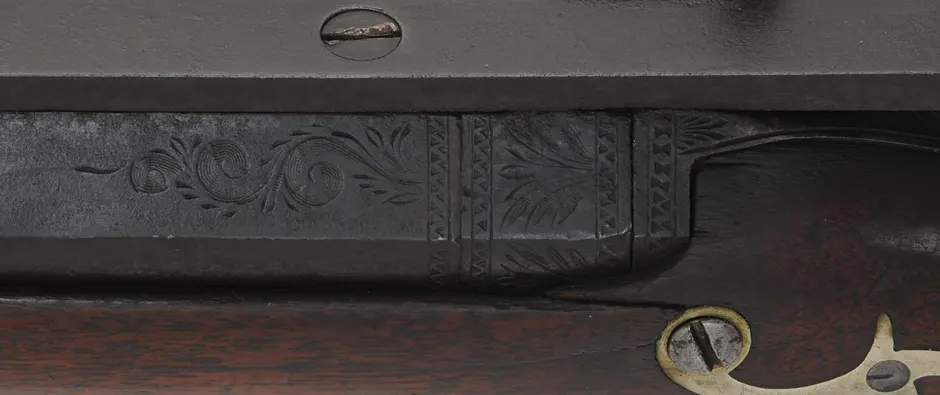
The bore is mostly bright with some scattered darker pitting. The exterior of the barrel has aged to a dark brown patina with some speckling around the breech. The barrel is stamped A. Leonard SR Vt on the top flat ahead of the forearm. The die stamped marking is surrounded with engraved scroll work. Additional scroll designs are on the quarter flats of the breech, and around the flats of the muzzle.
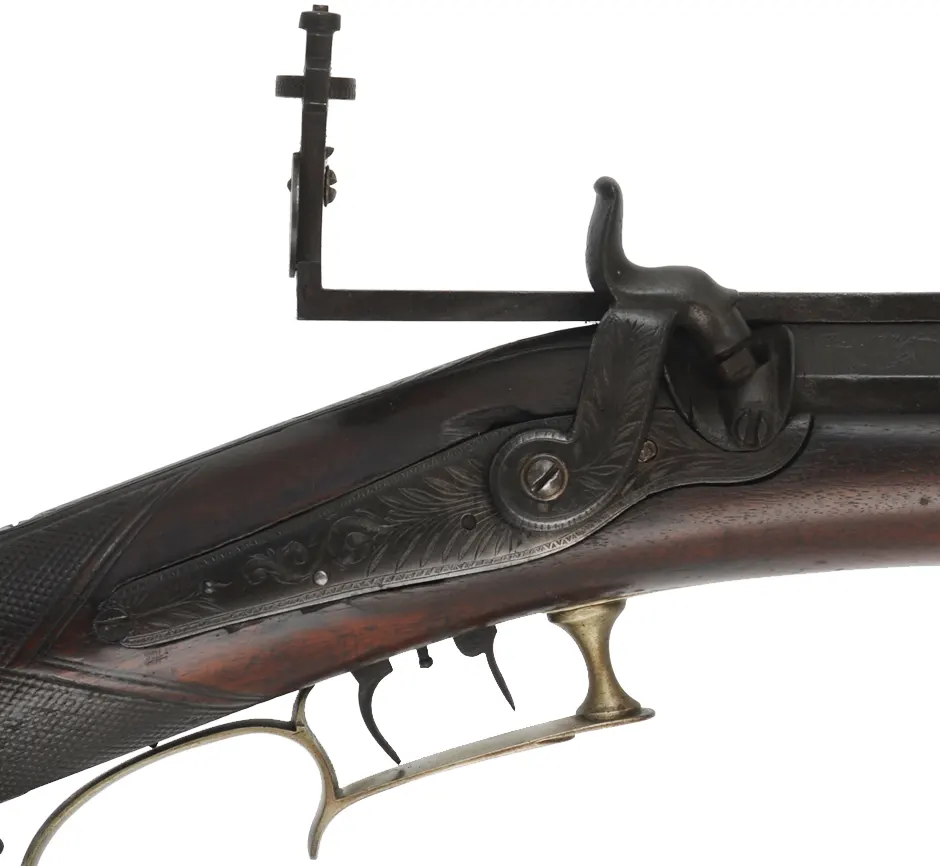
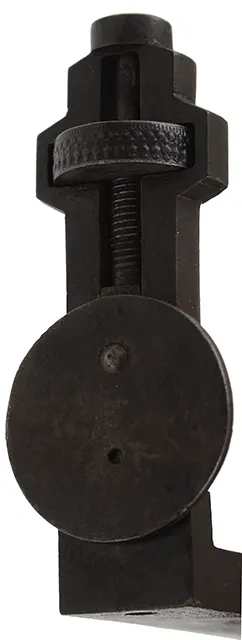
The front sight is a tall blade sight, it appears to be much later than the rest of the rifle. The base does not fill the dovetail side to side, which is unusual. The peep sight is a long strap sight, mounted with two screws to the top flat of the barrel. This sight seems to be a later period sight that was added to the barrel and the tang has a unfilled hole that appears to be from an earlier lollipop sight. The current sight also overlaps the hooked breech, which prevents use.
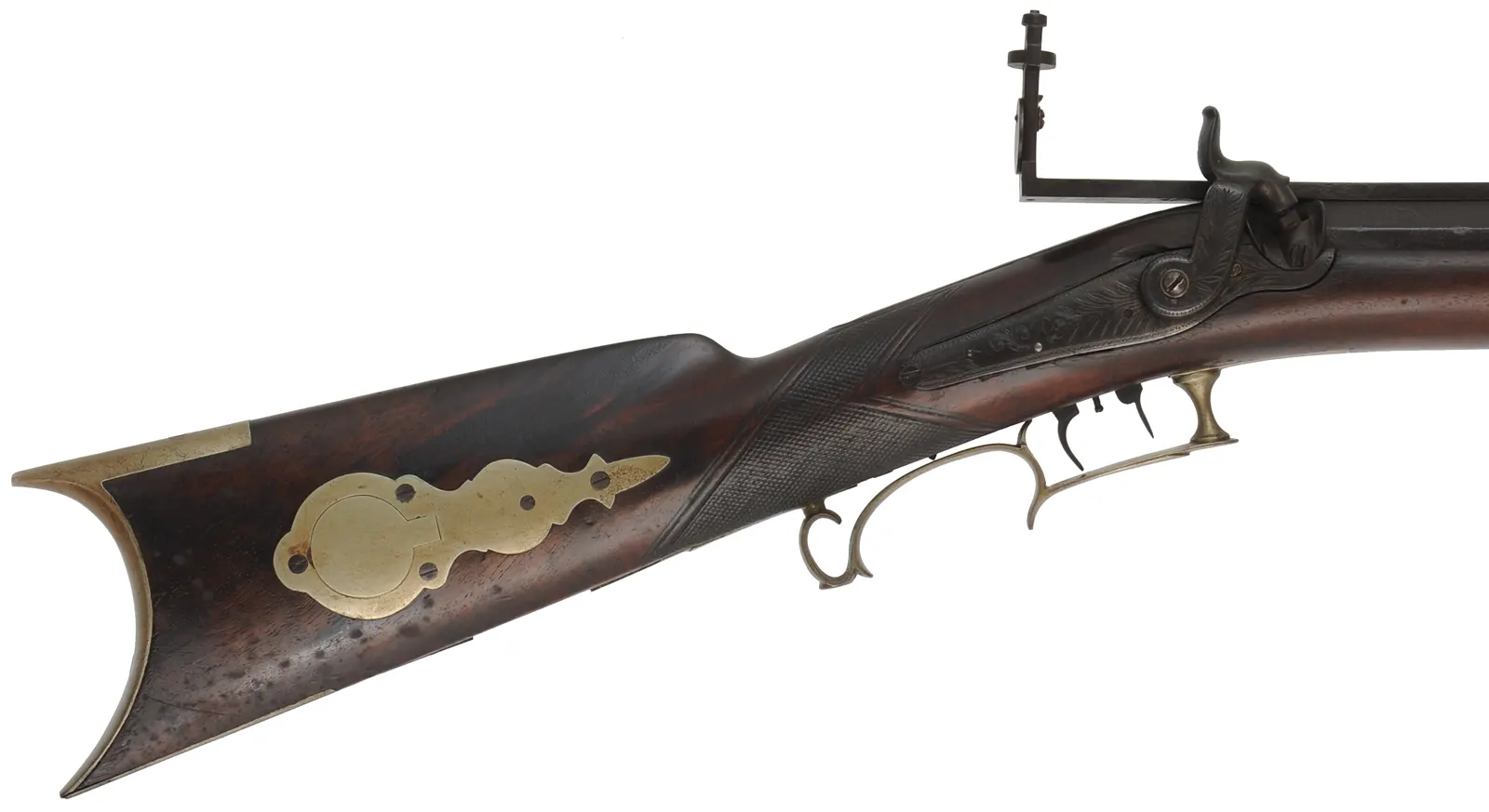
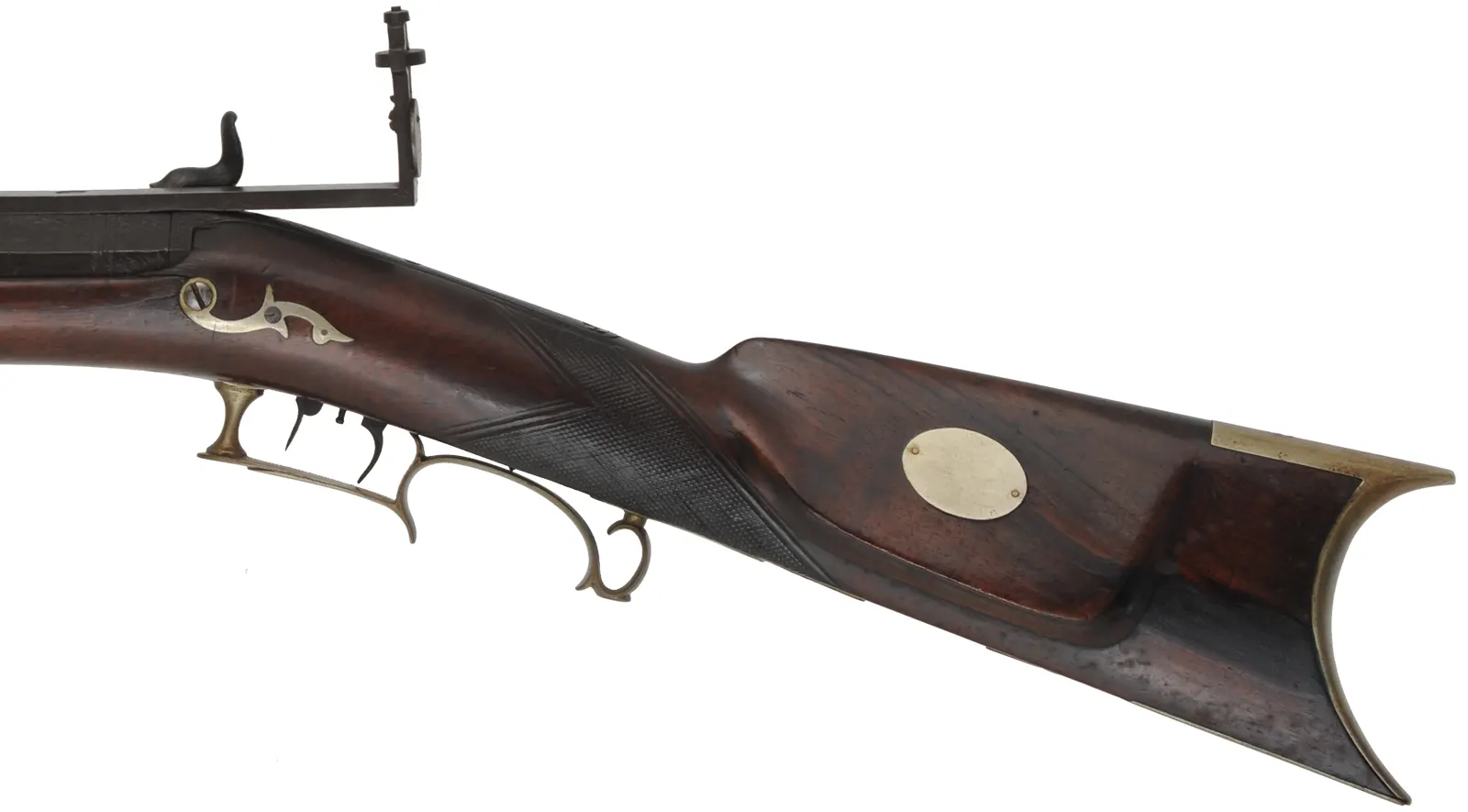
Stocked in walnut with a reddish brown color the wood has some chips along the upper edge of the lock panel. The finish also has some discoloration near the toe. The rifle is trimmed in mid-to-late 19th century period German silver. The design of the castings has a Philadelphia style to the triggerguard with the round post, finger spur, and curled grip rail. This is a period commercial casting and is found on many late 1840 to1850 era rifles. Our top view of the rifle shows the ever so slightly tapered comb that is shaped with an oval cheek piece. The rifle is fitted with a long tang hooked breech, which helps to strengthen the wrist of the rifle.
From below the square toe and German silver triggerguard of the rifle can be seen. Both are correctly mounted with steel screws. The forearm of the stock has a nickel silver inlay with a screw that engages a blind hole in the barrel to secure the barrel to the stock. The forearm has a poured pewter forend cap that has aged to a dark patina. This rifle has no provision for a ramrod, and was intended to be fired from a bench with a dedicated bench rod. A paisley style sideplate is mounted on the side panel to support the single lock bolt that secures the back action lock. The wood at the breech has a typical crack from the breech to sideplate from wood shrinkage pulling against the barrel. The oval cheek piece is fitted with a nickel silver oval.
Ignition for the rifle is provided by a back action percussion lock, note how the plate wraps under the breech. This lock has a single position tumbler with only a full cock notch. The lock has a simple engraved border and die stamped scroll designs. The lock is neatly inlet into the stock and fitted to the tang of the hooked breech. The decoratively filed snail of the hooked breech has high flash fences to protect the wood and barrel from repeated cap spray. Single lever double set triggers will only fire from the set position. The trigger backlash has been properly adjusted so the triggers can be set or the lock cocked in any order, but the triggers must be set to fire the lock. Adjust the screw between the two triggers, inboard to reduce set trigger release pressure, our outboard to require a stronger pressure.
A heavy barreled target rifle from the mid-19th century. If you collect antique target rifles, or are in need of a target rifle to round out your muzzle loading collection, then consider this nice piece today. Order it for a ten day visual inspection. You will be delighted. Else if it does not fit you, return it in unfired condition for same-day refund. Postage is your only risk, when you order any one-of-a-kind gun from Track, whether new, used, or antique.
The .48 caliber 31" barrel, including breech plug, has fast twist rifling likely for a Picket bullet, Sugar-Loaf bullet, or another similar elongated bullet of modest weight. Picket bullets (also called Picket balls) are described in detail in Ned Roberts' book, The Muzzle Loading Caplock Rifle. They were a unique American experiment, during the transition from round balls to elongated bullets. While the military selected the hollow base Minie bullet, which was quick to load, target shooters were searching for a better bullet design, despite the need for a separate guide starter (plunger) to engrave the rifling, and the need to clean the bore after every shot. Development of the Picket bullet rifle was abandoned after the American Civil War proved the effectiveness of breech loading cartridge firearms, but the Pickett bullet rifle was the choice of match shooters during America's 1840 to 1860 era.
The bore is mostly bright with some scattered darker pitting. The exterior of the barrel has aged to a dark brown patina with some speckling around the breech. The barrel is stamped A. Leonard SR Vt on the top flat ahead of the forearm. The die stamped marking is surrounded with engraved scroll work. Additional scroll designs are on the quarter flats of the breech, and around the flats of the muzzle.
The front sight is a tall blade sight, it appears to be much later than the rest of the rifle. The base does not fill the dovetail side to side, which is unusual. The peep sight is a long strap sight, mounted with two screws to the top flat of the barrel. This sight seems to be a later period sight that was added to the barrel and the tang has a unfilled hole that appears to be from an earlier lollipop sight. The current sight also overlaps the hooked breech, which prevents use.
Stocked in walnut with a reddish brown color the wood has some chips along the upper edge of the lock panel. The finish also has some discoloration near the toe. The rifle is trimmed in mid-to-late 19th century period German silver. The design of the castings has a Philadelphia style to the triggerguard with the round post, finger spur, and curled grip rail. This is a period commercial casting and is found on many late 1840 to1850 era rifles. Our top view of the rifle shows the ever so slightly tapered comb that is shaped with an oval cheek piece. The rifle is fitted with a long tang hooked breech, which helps to strengthen the wrist of the rifle.
From below the square toe and German silver triggerguard of the rifle can be seen. Both are correctly mounted with steel screws. The forearm of the stock has a nickel silver inlay with a screw that engages a blind hole in the barrel to secure the barrel to the stock. The forearm has a poured pewter forend cap that has aged to a dark patina. This rifle has no provision for a ramrod, and was intended to be fired from a bench with a dedicated bench rod. A paisley style sideplate is mounted on the side panel to support the single lock bolt that secures the back action lock. The wood at the breech has a typical crack from the breech to sideplate from wood shrinkage pulling against the barrel. The oval cheek piece is fitted with a nickel silver oval.
Ignition for the rifle is provided by a back action percussion lock, note how the plate wraps under the breech. This lock has a single position tumbler with only a full cock notch. The lock has a simple engraved border and die stamped scroll designs. The lock is neatly inlet into the stock and fitted to the tang of the hooked breech. The decoratively filed snail of the hooked breech has high flash fences to protect the wood and barrel from repeated cap spray. Single lever double set triggers will only fire from the set position. The trigger backlash has been properly adjusted so the triggers can be set or the lock cocked in any order, but the triggers must be set to fire the lock. Adjust the screw between the two triggers, inboard to reduce set trigger release pressure, our outboard to require a stronger pressure.
A heavy barreled target rifle from the mid-19th century. If you collect antique target rifles, or are in need of a target rifle to round out your muzzle loading collection, then consider this nice piece today. Order it for a ten day visual inspection. You will be delighted. Else if it does not fit you, return it in unfired condition for same-day refund. Postage is your only risk, when you order any one-of-a-kind gun from Track, whether new, used, or antique.